Why Kingway's Leading Single Vision Lenses Factory Portfolio Features CR39, Aspheric Geometry, and AR Treatment
Sep 18, 2026
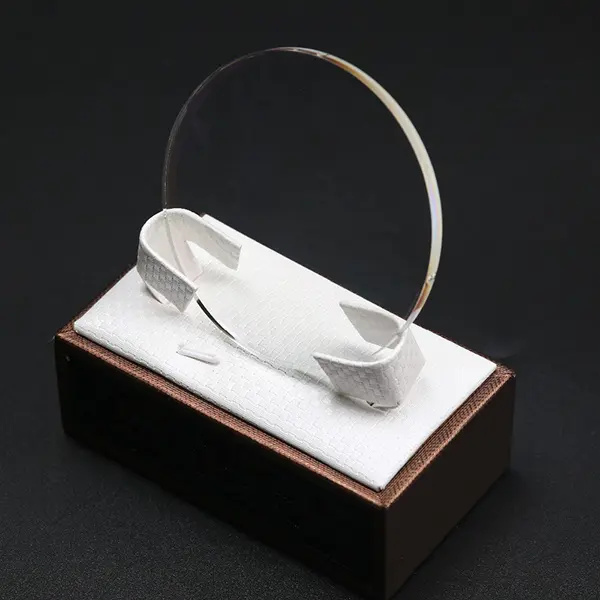
Danyang, Jiangsu Sep 17, 2026 (Issuewire.com) - Optical distributors and wholesale buyers often ask: Why does Kingway's Leading Single Vision Lenses Factory portfolio feature CR39, aspheric geometry, and AR treatment? The answer lies in procurement clarity and manufacturing precision. Kingway's single-vision portfolio separates CR39 material and index choices, aspheric geometry, and AR treatment into distinct specification layers. This organized approach ensures that optical distributors, wholesalers, and technical procurement teams can configure single-vision lenses accurately without mixing different technical concepts, thereby reducing sourcing mistakes and securing reliable product performance.
Kingway provides a specification-led sourcing route through the broader single vision lens range, including CR39 1.499, 1.56 aspherical CR39, 1.591 polycarbonate, and high-index pathways like 1.61 MR8 and 1.67 MR7. Material, geometry, and coating affect entirely different parts of the finished lens specification, so each attribute must be evaluated and chosen for its own specific functional role. By maintaining this strict technical separation, buyers can better align their bulk stock lens orders or specialized customized envelope requests with exact laboratory capabilities.
Single Vision Lens Selection Begins with Material and Refractive Index
Single-vision lenses use one continuous prescription power across the main optical surface to correct myopia, hyperopia, or astigmatism, but the physical lens substrate can still vary significantly by base material and refractive index. These foundational variables establish the physical platform before any curvature geometry or chemical surface coating is added to the product. For a distributor managing a large-scale catalog, treating the material and refractive index as the very first specification gate guarantees a reliable data basis for all subsequent processing, grinding, and quality control steps.
As an experienced single vision lenses factory, Kingway spans CR39 1.499, 1.56, 1.61 MR8, 1.67 MR7, 1.74 ultra-thin, and 1.591 polycarbonate routes, supported by a 5,000-square-meter facility capable of outputting 20,000 pairs daily. Procurement teams and technical managers can use this comprehensive range to separate the core material decision from later surface-design and chemical treatment choices. This logical division prevents specification overlap and allows chain stores or wholesalers to build a highly accurate, customized inventory matrix that directly addresses their regional market demands.
Where CR39 1.499 Fits Within Kingway's Single-Vision Range
CR39 1.499 provides the conventional, highly stable resin route within Kingway's single-vision assortment, delivering excellent optical clarity and consistent tinting characteristics. It gives global distributors and regional wholesalers a clear, universally recognized material reference point before moving into specialized higher-index or impact-resistant polycarbonate alternatives. Establishing this baseline allows optical buyers to standardize their procurement standards and evaluate supplier qualification against a known, highly traceable material performance metric.
The commercial value of keeping CR39 explicit in the Request for Quotation (RFQ) is total supply chain traceability. A professional buyer must be able to distinguish the base substrate material from an applied coating label--such as Uncoated (UC), Hard Coating (HC), Hard Multi-Coating (HMC), or Anti-Reflective (AR)--rather than casually using a surface treatment name as an ambiguous substitute for the actual lens material. This discipline prevents costly fulfillment errors and ensures that the Rx laboratory receives the exact polymer substrate required for its specific finishing equipment.
Established in 2011, Kingway manufactures extensive finished and semi-finished lens families, so CR39 single vision lenses can be discussed directly alongside other technical materials within the same broader optical-lens sourcing program. Because the factory supports comprehensive OEM services and customized packaging envelopes, wholesale clients can streamline their vendor list by consolidating standard stock orders and advanced semi-finished blanks through a single reliable manufacturing partner. This integration reduces administrative overhead and standardizes global shipping logistics.
Why Aspheric Geometry Is a Separate Design Decision
Aspheric geometry fundamentally changes the curvature strategy of the lens surface to reduce peripheral distortion and flatten the overall profile; it is distinctly not a material name, and it is not a surface coating. Kingway offers a 1.56 aspherical CR39 option and a 1.67 MR-7 aspheric single vision lens route, clearly illustrating how advanced surface geometry can sit on top of entirely different material platforms. This flexibility allows optical designers to maintain thin, cosmetically appealing edge profiles without being forced into a single refractive index.
For technical engineering teams and Rx lab managers, this strict separation matters immensely because a baseline material specification can remain constant while the front-surface geometry changes to meet different visual acuity requirements. The official RFQ or order sheet should therefore state explicitly whether an aspheric design is required, instead of falsely assuming that a higher index or a specific polymer material automatically determines the curvature geometry. Documenting the geometry separately reinforces strict quality assurance and protects the buyer against receiving spherical stock when flat-profile lenses were expected.
Aspheric and spherical curvature choices also interact heavily with the final frame selection, prescription parameters, and finished-lens aesthetics, making geometry a critical design decision that firmly belongs between raw material selection and final surface finishing. When prescription-lens centers assemble eyewear for end users, the geometry directly influences frame fit, edge thickness in minus lenses, and center thickness in plus lenses. By treating geometry as an independent parameter, buyers ensure that the resulting semi-finished or finished blanks will physically match their target frame inventory.
Treating geometry as its own dedicated procurement field also lets technical evaluation teams compare alternative surfaces accurately without altering the material or coating fields in the same RFQ. If a distributor wants to test the market acceptance of a flatter lens profile, they can specify an aspheric 1.56 CR39 configuration while keeping the standard HC or AR coatings identical to their standard spherical stock. This controlled approach to equipment selection and product testing yields reliable performance data and minimizes sourcing risks during portfolio expansion.
How AR, HC, and HMC Change the Surface-Treatment Specification
AR, HC, and HMC describe advanced chemical surface-treatment routes rather than the underlying optical lens substrate. Kingway systematically pairs different polymer materials and geometric designs with multiple specialized coating choices, so the required coating must always appear as its own distinct field on the RFQ. Whether a buyer is ordering AR coated single vision lenses or a highly customized 1.67 MR7 batch, separating the coating requirement ensures that the factory applies the correct protective or optical-enhancing layers.
Hard coating (HC) fundamentally supports surface durability by protecting the resin against daily abrasions and handling scratches, while anti-reflective (AR) treatment specifically addresses unwanted light reflections and glare at the lens surface to improve total light transmission. Hard Multi-Coating (HMC) strategically combines both hard scratch resistance and multilayer anti-reflective logic in product configurations where maximum optical performance is offered. Documenting these treatments accurately guarantees that the finished product meets the necessary durability and visual clarity standards demanded by professional opticians.
Keeping the surface treatment independent in procurement documentation allows a B2B buyer to accurately compare two lenses featuring the identical material and geometry but entirely different finishing requirements. It also actively prevents ambiguous shorthand terms like 'AR lens' from obscuring the critical refractive index, base material, and surface design sitting underneath the coating. When wholesalers enforce this level of specification clarity, they eliminate assumptions, improve their factory communication, and secure a much more reliable data basis for their internal quality control checks.
How High-Index and Polycarbonate Routes Extend the Portfolio
High-index and polycarbonate lenses significantly expand the single-vision product range far beyond the standard CR39 baseline. Kingway's comprehensive stock taxonomy deliberately separates the 1.61 MR8, 1.67 MR7, ultra-thin 1.74, and impact-resistant 1.591 polycarbonate formulations into distinct material or index routes for precise ordering. By classifying these advanced substrates independently, the factory enables distributors to build a tiered product catalog that addresses everything from basic low-prescription needs to complex, high-diopter requirements requiring maximum edge-thickness reduction.
A global distributor or regional wholesaler can confidently use these high-index routes when the prescription depth, rimless frame design, specific impact requirements, or ultimate thickness objective makes a different chemical substrate structurally appropriate. The sourcing decision should always remain application-led rather than defaulting to the assumption that one particular refractive index is universally preferable for every patient. Selecting the right base material based on the actual optical application ensures better processing yields for Rx laboratories and fewer product returns across the supply chain.
Single Vision Specification FAQ for Optical Buyers
These essential procurement questions help keep material, geometry, and coating definitions from being erroneously combined into one ambiguous, risk-prone product description during the ordering process.
Is CR39 the Same Thing as a Refractive Index?
CR39 is fundamentally a proprietary lens material family and chemical resin type, while 1.499 is the specific refractive index strictly associated with the standard Kingway CR39 stock route discussed here.
Does Aspheric Describe the Lens Material?
No. Aspheric specifically describes the surface curvature geometry and flattening strategy, meaning it can be seamlessly combined with more than one base material or refractive index route during manufacturing.
Is AR Coating a Substitute for the Base Lens Specification?
No. AR (Anti-Reflective) is purely a chemical surface treatment, so the formal RFQ still absolutely requires the buyer to specify the underlying material, refractive index, optical design, and exact prescription requirements.
Which Kingway Routes Extend Beyond CR39?
The factory's extensive single-vision taxonomy robustly includes 1.61 MR8, 1.67 MR7, 1.74 high-index resin, and 1.591 polycarbonate pathways in addition to the foundational CR39-based optical options.
What Should a Distributor Put in a Single-Vision RFQ?
A professional RFQ must clearly state the exact material or index, the required prescription range, spherical or aspheric geometry where relevant, the specific coating requirement, precise diameter or frame constraints, total quantity, and customized envelope or packaging needs.
Build a Leading Single Vision Lenses Factory RFQ Around Distinct Specification Layers
Kingway's comprehensive single-vision portfolio is exponentially easier to source, verify, and stock when the base material or index, surface geometry, chemical coating, prescription range, and commercial packaging requirements are written as entirely separate documentation fields. That rigid organizational structure keeps CR39 polymer, aspheric flattening geometry, and AR surface treatment technically distinct for engineering teams, while still successfully combining them into one flawless, highly accurate finished-lens configuration ready for global distribution.
Send the required single-vision configuration, order list, or detailed Rx sheet through https://www.kingway-optical.com/ to flawlessly align your regional product selection with accurate quotation inputs. By leveraging Kingway's 15 years of manufacturing expertise and dedicated B2B solutions, optical wholesalers can secure reliable optical performance, transparent trade terms, and consistent supply chain fulfillment.

Source :Zhenjiang Kingway Optical Co., Ltd.
This article was originally published by IssueWire. Read the original article here.
MORE NEWS










RECOMMENDED
YOUR NEWS, OUR NETWORK.
Do you have Great News you want to tell the world?
Be it updates about your business or your community, you can make sure that it’s heard by submitting your story to our network reaching hundreds of news sites across 6 verticals.