How a Global Advanced Stock Lens Supplier from China Uses Customized Envelopes and Order Lists Through Kingway
Sep 18, 2026
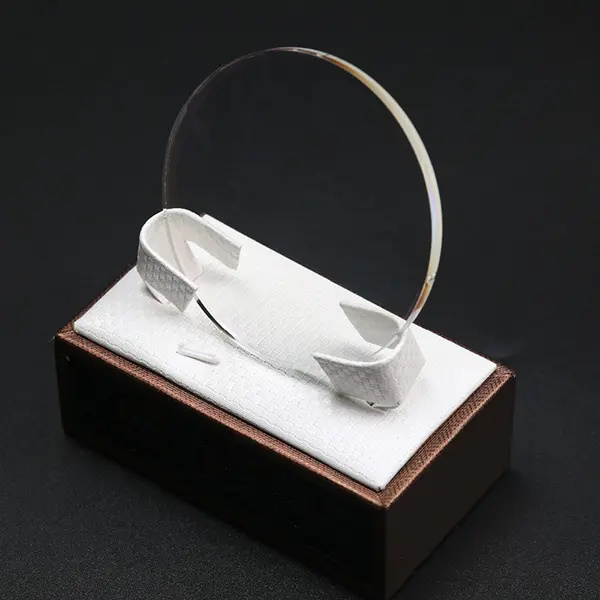
Danyang, Jiangsu Sep 17, 2026 (Issuewire.com) - For wholesale buyers evaluating optical procurement, how does a Global Advanced Stock Lens Supplier from China use customized envelopes and order lists? The answer involves connecting exact product configurations with branded presentation right at the manufacturing source. Rather than treating optical supply and packaging as disconnected steps, buyers can consolidate their commercial requirements through an itemized lens order list. This unified workflow allows wholesale operations to secure reliable volumes of single-vision, progressive, bifocal, and specialty optical products while maintaining their private-label identity. By structuring the inquiry around specific quantities and predefined trade terms, distributors create a repeatable framework that moves smoothly from quotation to final order confirmation.
Stock-Lens Procurement Starts with a Defined Lens List and Quantity
Procurement predictability requires moving from a broad catalog to a highly specific bill of materials. A repeatable stock order starts by converting assortment choices into item-level quantities before pricing and production scheduling are discussed. When distributors prepare a stock replenishment cycle, they must translate their seasonal assortment plans into exact volumes long before the factory can allocate production capacity. This discipline keeps the commercial request tied to the exact mix of single-vision, progressive, bifocal, photochromic, blue-cut, polycarbonate, or other stock products needed by the buyer. A generic inquiry provides little basis for accurate forecasting; a defined order list anchors the request, establishing a clear baseline for the manufacturing schedule.
Within B2B supply chains, the lens list functions as the central specification that aligns the buyer's intent with production reality. For procurement teams, the lens list becomes the working specification shared by purchasing and the supplier. It reduces ambiguity between a general request for stock lenses and an order that can be priced, packed, and confirmed against a defined quantity mix. When every line item details the specific refractive index, material route, and geometric design, the resulting document serves as a binding reference. This clarity allows Zhenjiang Kingway Optical Co., Ltd. to evaluate the volume requirements, determine the manufacturing sequence, and issue a commercial quotation that accurately reflects the requested assortment.
Customized Envelopes Add an OEM Packaging Layer
Securing the correct optical specifications is only part of the supply equation; professional presentation at the destination is equally critical. Customized envelopes allow the stock-lens program to extend beyond the optical product into private-label presentation. Kingway accepts OEM requests with customized envelopes, so distributors can align stock replenishment with their own packaging requirements without changing the underlying lens specification. This capability means that wholesale buyers do not have to decouple physical product sourcing from their brand execution. They can integrate their design requirements directly into the replenishment cycle, ensuring that the lenses arrive in branded materials ready for distribution to Rx labs or chain stores.
Private-label packaging requirements must be aligned carefully with technical data. Packaging should be defined after the lens assortment because the envelope must follow the product identification used in the order. Keeping optical configuration and packaging as separate decision layers makes revisions easier when one part of the assortment changes. The customized envelope inherently relies on the diopter ranges, index details, and coating specifications established in the initial order list. If a market shift requires an adjustment to the volume of blue-light blocking lenses, the buyer can update the optical specification without rewriting the entire packaging brief. This modular approach simplifies revisions and prevents minor changes from stalling the production queue.
A consolidated manufacturing base is essential for supporting this dual-layer procurement strategy effectively. Established in 2011 with a 5,000-square-meter facility and a daily output capacity of 20,000 pairs, Kingway manufactures finished and semi-finished optical lenses across multiple index and design families, giving wholesale buyers one portfolio from which to build stock assortments before applying the OEM envelope layer. Rather than managing fragmented orders across multiple vendors, procurement teams can build a cohesive lens list from one factory source. Once the optical foundation is secure, applying the private-label envelope instructions becomes a straightforward administrative step.
Which Order-List Fields Turn Assortment Choices into Actionable Inputs?
For an order list to function as a definitive procurement tool, it must translate broad assortment strategies into highly specific operational inputs. A stock-lens order list is most useful when every row identifies what is being ordered and how much is required. The minimum commercial brief should keep product selection, quantity, and packaging instructions visible at the same time. This unified view prevents critical details from being buried in separate emails, ensuring that both the purchasing team and the factory planners reference identical data during quotation and fulfillment.
To maintain data integrity throughout the supply cycle, document formatting must remain standardized. The purchasing brief should use consistent fields from item selection through order confirmation so optical and packaging requirements stay aligned. Include these fields in the purchasing brief:
- Lens family and design, such as single vision, bifocal, progressive, photochromic, blue cut, or polycarbonate.
- Refractive index or material route required for the selected item, such as CR39 1.499 or MR-7 1.67.
- Coating or functional treatment where it is part of the chosen stock SKU, including hard multi-coating or anti-reflective layers.
- Quantity required for each lens item rather than one undifferentiated bulk total.
- Customized-envelope requirements and private-label instructions for OEM orders.
- Destination and requested trade term for the commercial quotation.
Implementing this rigorous field structure gives distributors a practical basis for comparing the quotation with the intended assortment. Because every variable is isolated, buyers can instantly verify that the quoted pricing matches the exact index, design, and volume requested. A separate packaging field also lets procurement teams change envelope requirements without rewriting optical specifications that remain unchanged. It also helps preserve the same product identifiers when the order moves from selection to confirmation and later replenishment, creating a stable template for long-term supply chain management.
How Trade Terms and Order Confirmation Shape the Replenishment Workflow
Commercial logistics are inseparable from the physical product specification in cross-border optical procurement. Kingway's stock-quantity route supports FOB China port and CFR trade terms, so the destination and commercial basis belong in the same order discussion as the product list. A global stock-lens sourcing program works more smoothly when the buyer defines both the product mix and the trade term before the order is confirmed. FOB terms allow the buyer to control freight from the port of loading, while CFR arrangements mean the manufacturer coordinates freight to the destination port. Addressing these logistical parameters early prevents delays and ensures the initial quotation accurately reflects the total landed cost.
The timeline for receiving a wholesale stock order is directly tethered to the scale of the request. Kingway's stock-quantity program connects delivery timing to confirmed order quantity. That makes quantity accuracy important not only for pricing but also for the production and shipment schedule communicated after confirmation. Depending on the requested quantity, delivery is generally stated as 10 to 15 days following order confirmation. If the initial lens list contains vague estimates, the factory cannot allocate the appropriate manufacturing capacity or commit to a firm dispatch date. By providing exact item-level quantities upfront, procurement teams enable the supplier to lock in a dependable fulfillment schedule immediately.
Stock Lens Ordering FAQ for Distributors and Chain Stores
Converting a broad product strategy into an actionable procurement document can raise practical questions. These questions help distributors translate a stock-lens assortment into a cleaner OEM ordering brief.
Can Customized Envelopes Be Used for Stock-Lens Orders?
Yes. Kingway's stock-quantity solution accepts OEM orders with customized envelopes, allowing private-label packaging to be specified alongside the lens assortment. This ensures that bulk replenishment arrives ready for regional distribution without requiring secondary repackaging at the destination.
Who Is the Stock-Quantity Program Designed For?
The program is structured for distributors, wholesale buyers, and chain stores that purchase defined quantities across a stock-lens list. It serves professional B2B procurement operations that require reliable volumes of finished and semi-finished optical products.
Why Should Quantities Be Assigned to Individual Lens Items?
Item-level quantities connect the selected lens configuration with pricing, packaging, order confirmation, and replenishment instead of leaving the supplier to interpret a single total quantity. This precision allows the factory to allocate exact production resources based on the specific refractive index and design needed.
Which Trade Terms Can Enter the Stock-Lens Discussion?
FOB China port and CFR are part of Kingway's stock-quantity commercial route, so the buyer can include the preferred trade basis with the destination and lens list. Defining this early ensures the commercial quotation covers the complete logistical scope.
How Can Repeat Orders Stay Consistent?
Reusing the same lens identifiers, index or material route, coating choice, quantity format, and envelope specification gives procurement teams a stable reference for subsequent replenishment orders. This rigorous document control significantly accelerates future purchasing cycles.
Use a Global Advanced Stock Lens Supplier from China Brief for the Next Kingway Order
The ultimate goal of the procurement preparation phase is to generate a comprehensive request that a manufacturer can immediately process. A useful stock-lens RFQ brings the assortment, item quantities, OEM envelope requirements, destination, and trade term into one purchasing brief. That gives a Global Advanced Stock Lens Supplier from China request enough structure to move directly into commercial review. By consolidating these critical details, buyers bypass preliminary clarifications and establish a highly efficient baseline for manufacturing and private-label execution.
Once the internal specification is finalized, the transition to active sourcing is straightforward for procurement teams. Send the completed lens list and packaging requirements through the https://www.kingway-optical.com/ to begin the quotation and order-confirmation process. This integrated approach ensures that every optical parameter, packaging instruction, and logistical detail is aligned from the very first inquiry.

Source :Zhenjiang Kingway Optical Co., Ltd.
This article was originally published by IssueWire. Read the original article here.
MORE NEWS












RECOMMENDED
YOUR NEWS, OUR NETWORK.
Do you have Great News you want to tell the world?
Be it updates about your business or your community, you can make sure that it’s heard by submitting your story to our network reaching hundreds of news sites across 6 verticals.