Attorney and Author Majid Foroozandeh, Esq. Traces One Hundred Years of the Strait of Hormuz

Sep 18, 2026

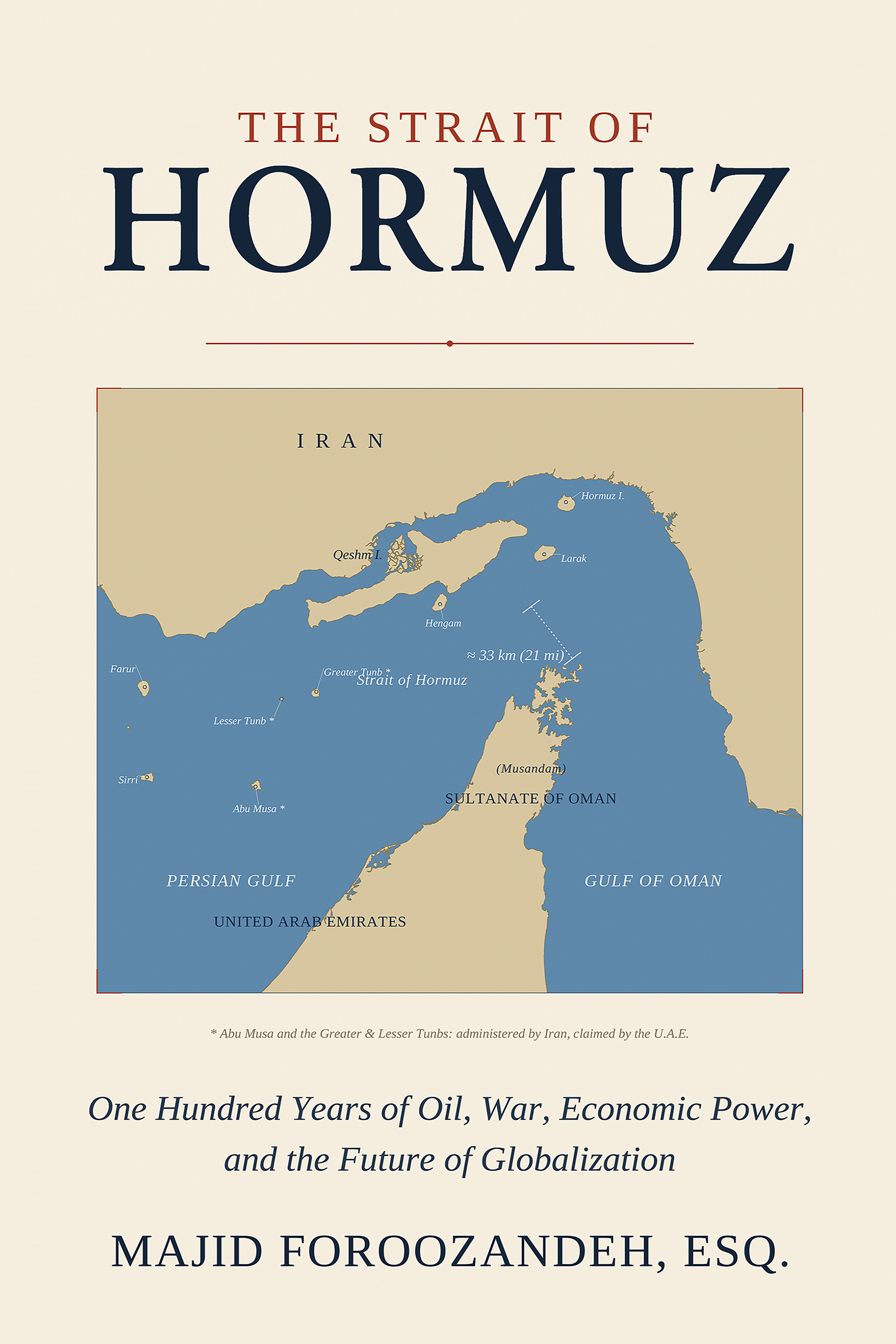
The Strait of Hormuz: One Hundred Years of Oil, War, Economic Power, and the Future of Globalization releases September 21, 2026, in hardcover, paperback, and ebook; now available for pre-order


Laguna Hills, California Sep 17, 2026 (Issuewire.com) - Atticus Publishing announces the September 21, 2026 release of The Strait of Hormuz: One Hundred Years of Oil, War, Economic Power, and the Future of Globalization by attorney and author Majid Foroozandeh, Esq. The book is available now for pre-order on Amazon and through major online retailers.

In March 2026, Iran declared the Strait of Hormuz closed and began attacking shipping and laying mines in the lanes. Within days the marine war-risk underwriters withdrew their cover for the Persian Gulf, and the tankers that carry roughly a fifth of the world's oil stopped at the approaches to the strait--not because a fleet barred the way, but because no cargo could be insured. A ceasefire and a short-lived agreement followed in the spring and early summer; by July the fighting had resumed. The Strait of Hormuz is a book-length account that carries the history of the world's most consequential chokepoint through that crisis and its aftermath, written as the events unfolded and documented from primary sources.

The story begins long before oil. From the Portuguese fortress on Hormuz Island and the Anglo-Persian alliance that took it in 1622, the book follows the strait into the petroleum age--the first tanker cargoes out of Abadan in 1912, the oil that carried the Allies to victory in two world wars, the rise and fall of the Shah, the revolution of 1979, the Tanker War of the 1980s, four decades of sanctions and financial warfare, the shadow war between Iran and Israel, and the chain of escalation that ran from October 7, 2023 to the open war and closure of 2026. Along the way it explains why, in 2024, some twenty million barrels of oil a day--about a fifth of the world's petroleum-liquids consumption and more than a quarter of all seaborne oil--together with roughly a fifth of the world's liquefied natural gas, passed through a channel only twenty-one miles wide, and why almost none of it could go anywhere else.

The book's central argument is that Hormuz is far more than a maritime passage. It is the single point where the five pillars of the modern economic order--energy, the dollar, the sea lanes, the insurance market, and naval power--converge, and therefore the lens through which the evolution of energy, economics, military power, sanctions, and globalization itself can be understood. Its most striking conclusion is that the decisive weapon at Hormuz in 2026 was not a mine or a missile but a contract: whoever can make a waterway uninsurable can close it, and in a globalized economy the insurer's desk has become as strategic as the admiral's bridge.

"For a hundred years we have measured the importance of Hormuz in barrels per day," said Foroozandeh. "What 2026 showed is that the strait can be shut without sinking a single ship, simply by making the passage impossible to insure. That is a lesson about the whole architecture of globalization, not just about one waterway, and it is the reason I wrote this book."

Written for policymakers, attorneys, military and maritime professionals, investors, journalists, and general readers, the book is organized in eight parts and supported by 469 footnotes drawn from government, academic, and industry sources, including the U.S. Energy Information Administration, the International Energy Agency, the Congressional Research Service, the UK House of Commons Library, the Federal Reserve Bank of Dallas, and declassified U.S. and British records. It includes maps and figures, a chronology, a glossary, and a select bibliography.

Publication details

Title: The Strait of Hormuz: One Hundred Years of Oil, War, Economic Power, and the Future of Globalization

Author: Majid Foroozandeh, Esq.

Publisher: Atticus Publishing

Release date: September 21, 2026

Formats: Hardcover (ISBN 979-8-90252-364-2), Paperback (ISBN 979-8-90252-363-5), Ebook (ISBN 979-8-90252-365-9)

Category: Nonfiction -- Geopolitics / International Relations / Modern History / Energy & Economics / Military & Maritime Affairs

The Strait of Hormuz is available now for pre-order on Amazon at https://www.amazon.com/Strait-Hormuz-Hundred-Economic-Globalization-ebook/dp/B0HG67SVMC and through major online retailers, including Barnes & Noble [Paperback, Hardcover, eBook and Barnes & Noble]. Members of the media are invited to request a review copy or to schedule an interview with the author.

About the Author

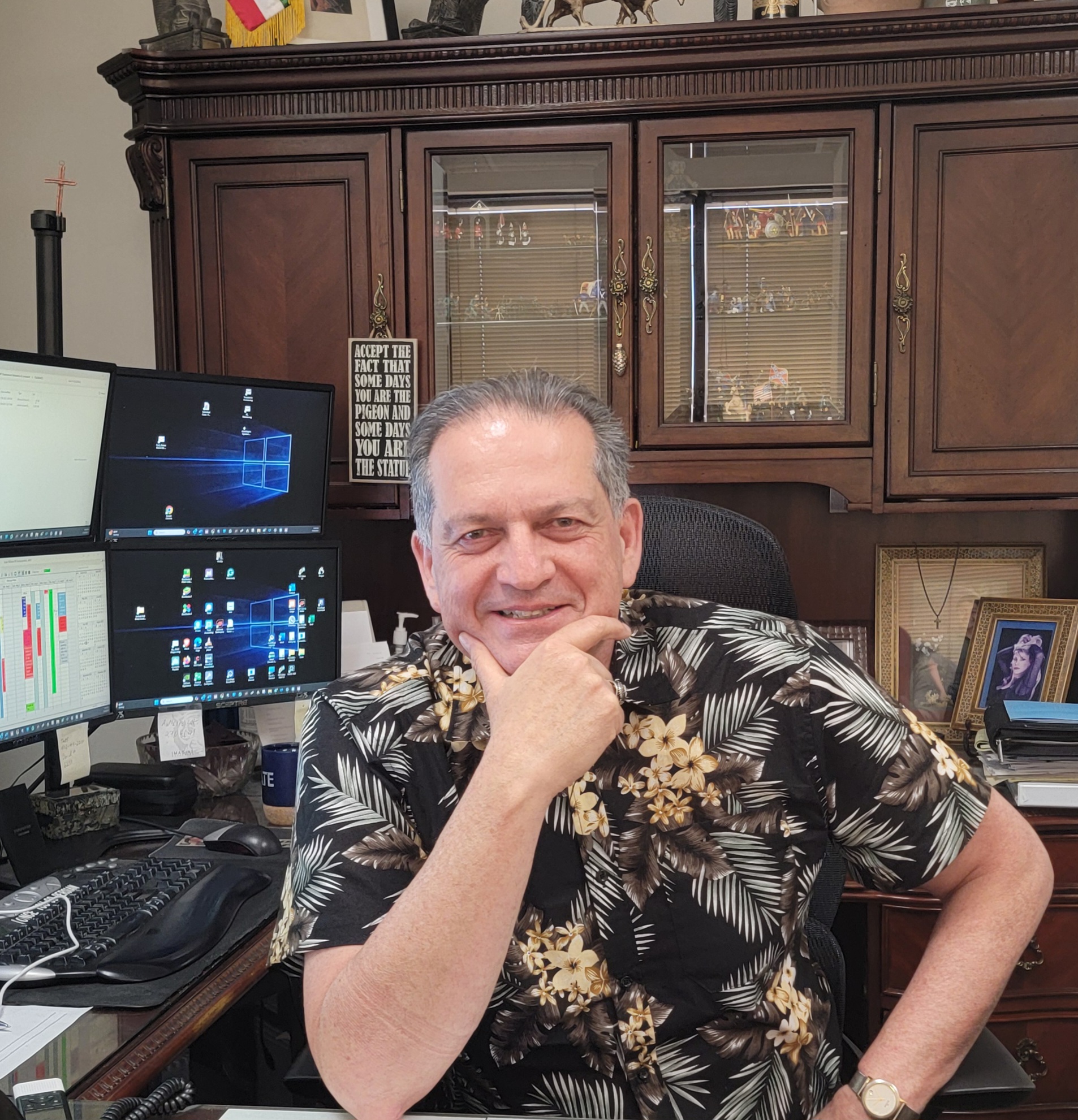
MAJID FOROOZANDEH, ESQ. is a California attorney and the principal of Law Offices of Foroozandeh, APC, a civil litigation and business law firm in Laguna Hills, California. He is the author of Economic Hegemony: The Hidden Architecture of Global Economic Domination, a study of how the dollar, sanctions, and control of the global financial system are used as instruments of power, and of the geopolitical thrillers The Operative and The Asset. His work spans law, history, and international affairs, with a long-standing focus on the geopolitics of the Middle East, energy markets, and maritime security. He brings to The Strait of Hormuz the evidence-driven approach of a trial lawyer and the perspective of an author who has written on the economic architecture of global power.

About Atticus Publishing

Atticus Publishing is a full-service independent publishing company based in San Francisco, California, dedicated to helping authors bring their stories and ideas to the world. Offering comprehensive editorial, design, production, marketing, and distribution services, Atticus Publishing partners with authors at every stage of the publishing journey.

Media Contact

Monica Compton

Atticus Publishing

548 Market St., San Francisco, CA 94104

Phone: (888) 208-9296

Email: [email protected]

Website: www.atticuspublishing.com

Author Books Website: www.foroozandehbooks.com

Author YouTube: www.youtube.com/@majid4law
Media Contact

Atticus Publishing


*****@atticuspublishing.com

548 Market St

Source :Atticus Publishing

This article was originally published by IssueWire. Read the original article here.

MORE NEWS
Why Democrats are pivoting to thirst traps

Oct 26, 2026

Why Democrats are pivoting to thirst traps

“It is a very real dynamic that you could have all these videos about Jon Ossoff, and it's not seen as detracting away from his overall message or his seriousness as a politician,” The 19th’s Grace Panetta said on Vox’s Today, Explained podcast. | Elijah Nouvelage/Getty Images Democrats have been emphasizing lots of issues in the runup to the 2026 midterms: The Iran war. The state of the economy and healthcare. Corruption. And…hotness. Specifically, their candidates: The internet is awash in clips of Michigan candidate Abdul El-Sayed pumping iron and podcasters proclaiming that “America deserves a hot president” in a video interspersed with photos of Georgia Sen. Jon Ossoff. Having a good-looking candidate is by no means a new tactic — famously, it may have helped John F. Kennedy win election over Richard Nixon — but the online left is adapting that strategy for the internet and fandom age.  Grace Panetta, a politics reporter for The 19th, wrote about how “thirst edits” of Ossoff in particular are proliferating online. Panetta says the organic origins of a lot of these videos are of particular interest to Democratic operatives, who see it as a way to gain back ground they lost on the internet after the 2024 election.  Panetta spoke with Today, Explained co-host Sean Rameswaram about who’s thirsting over Democratic politicians in the first place, how 2026’s hot candidates are different from those of yore, and whether it’s actually giving them a boost.  Below is an excerpt of their conversation, edited for length and clarity. There’s much more in the full podcast, so listen to Today, Explained wherever you get your podcasts, including Apple Podcasts, Pandora, and Spotify. Where are these edits coming from? Regular online creators. And it’s important to note at the outset that these are not paid partnerships. The campaign is not paying these influencers to make edits about how they think their candidate’s really attractive.  That’s partly why I wanted to dig into it, because it’s organic. These are just online creators wanting to draw visibility and attention to a candidate that they really like. Jon Ossoff is currently running for reelection in these midterms. How do we know for sure that he isn’t somehow behind the campaign? I spoke to several creators who make these videos and they said that they’re doing it for the love of the game and they’re just supporters. His campaign did not give me a quote or a statement for this story. So it’s fair to assume that he’s not directly involved and he doesn’t repost these videos.  But as people pointed out to me, his campaign knows that they have an attractive, compelling candidate. And they’ve previously been vaunted for their digital strategy this cycle of putting out very high-quality livestreams of his rallies. There’s a lot of material for an enterprising TikToker who wants to make these edits or clips. They have a lot to work with.  His campaign, as one person put it, is definitely playing into that, but not directly engaging. It’s a fine line to walk. Is it just an Ossoff thing or is this going on with other candidates? I do recall that Abdul El-Sayed hits the gym. Famously so. Yes, he hits the gym. I just watched so many videos for this story. I also came across a fair number of Gavin Newsom edits. There are people who think he gives sort of a Patrick Bateman, American Psycho vibe. There are also official Democratic accounts, including the TikTok account for the DNC, the headquarters account, which was formerly Kamala HQ, who have been posting edits of Ossoff and also Abdul El-Sayed, who kind of leans into this gym-bro persona.  The headquarters account posted a side-by-side of Ossoff and Abdul El-Sayed with the caption, “There are 69 days until election day.” Nice. Yes. There are also lots of edits of Mamdani, and former President Barack Obama. Obama nostalgia content goes hard on the internet. So you’re seeing these more official side Democratic campaign accounts leaning into it and playing up their candidates. Having an attractive candidate is nothing new. You mentioned Obama. JFK was famously dashing. What feels different about what you’re seeing now on social media? I think this is really a culmination of a lot of different things happening right now in politics and specifically within the Democratic Party.  After their loss in 2024, there was a lot of conversation about the gerontocracy, how we’re governed by a lot of really old people, for the most part, in this century. And also about Democrats’ digital strategy and the aftermath of 2024.  One thing that a lot of people in that digital space have been talking about is how Republicans and the Trump campaign really capitalized on getting that organic engagement on platforms like TikTok and Instagram, where a lot of Americans are now going to get at least some of their news, and also engaging with and encouraging the creation of this kind of organic content on platforms and from creators that are not always expressly political or official-side.  “A candidate’s messaging strategy is only as good as the content and only if it meets people where they are and actually speaks to a real need people have.” As one Democrat I talked to put it, she thinks it’s a way for Democrats to win back the internet and to really create a contrast with the Republicans. And she said to have fun on the internet because Republicans are having fun on the internet and it appears to be working for them, or at least it was in 2024. Is there something about this being something on the left that makes it sort of tricky? This is, broadly speaking, objectification, right? It is a fine line between thirst and objectification. And there is also a gendered element to it that it is mostly men that these types of videos are being made about.  Now, granted, a lot of people make sort of hype edits or positive content about AOC because she’s a very popular female politician on the left, but it’s true that women candidates are held to higher standards in terms of how they present themselves and how their supporters portray them.  It is a very real dynamic that you could have all these videos about Jon Ossoff, and it’s not seen as detracting away from his overall message or his seriousness as a politician. Is there a drawback of focusing on looks? Does it make the Democratic Party or these candidates seem superficial or not that serious? President Trump has been the defining figure in our politics for 10 years now. And he is famously very, very image focused and image obsessed. We live in a very image-obsessed society, and I think there’s kind of a bipartisan acknowledgement of that.  And looks matter to people in all kinds of ways. They do matter in politics, they do matter to voters. Whether you like that that’s the case or not, it is the reality. And I think the way that a lot of people on the left see this is, people want to look at attractive people. People take attractive people more seriously and are more willing to listen to them. So we should play into that and play that up.  That’s also been the case on the right. President Trump famously loves people out of “central casting.” There’s been this whole movement on the right about making conservatism sexy again. And especially at the beginning of the second Trump term, you had all these influencers talking about how the second Trump term was going to usher in this great age of hotness, which is of course very based on sort of stereotypical male-centered Eurocentric beauty standards.  I think the genie’s out of the bottle on this one in terms of the fact that our politics and society is very image-obsessed. And I think the left, being locked out of power, realizes they have to play on those terms and they have fun doing it. You could look at it as giving “Kamala is brat,” which famously did not work. Is it working in any tangible way for Ossoff, for Abdul El-Sayed, or anyone else? I think a lot of the time in politics, the success of a message is really dependent on the broader political situation. I think a part of the reason that the Kamala’s brat thing didn’t work is people were like, “Okay, that’s great, but my gas is too expensive and prices are too high and I’m not happy with how things have gone under the Biden administration, so I don’t really care.” I don’t know that specific digital strategy makes or breaks a campaign or candidate, but it feeds into a bunch of larger factors.  Something that a lot of people I spoke to said they liked about Jon Ossoff is how he is incredibly serious in Senate hearings. He doesn’t grandstand. He really holds Trump administration officials’ feet to the fire. He’s been very focused in his role in the Senate and on the campaign trail about calling out corruption. He’s a very, very gifted speaker and orator. So I think a candidate’s messaging strategy is only as good as the content and only if it meets people where they are and actually speaks to a real need people have. And I think people are really unhappy with the second Trump term and politicians being super old and out of touch, and it’s a perfect storm of factors that makes it work for him.

YOUR NEWS, OUR NETWORK.

Do you have Great News you want to tell the world?

Be it updates about your business or your community, you can make sure that it’s heard by submitting your story to our network reaching hundreds of news sites across 6 verticals.

ABOUT US
Logo

We believe that information is the new age currency. Digital Press Network is your source for digital culture and innovation for the connected generation.

SUBSCRIBE
Copyright © 2015 - 2026 Digital Press Network. All Rights Reserved.